Alright, let's talk stucco. If you're building a new home or giving your current place a facelift here in Santa Rosa, you're probably weighing your options. When it comes to stucco, the two main contenders you'll hear about are traditional 3-coat stucco and the more modern one-coat system. I see a lot of both around here, and each has its pros and cons. You want to know what's best for your house, right? Let's get into it.
What's the Difference?
First off, the names pretty much tell you the main structural difference. Traditional stucco, sometimes called 'hard coat' or 'cement stucco,' involves three distinct layers applied over a wire lath: a scratch coat, a brown coat, and then the finish coat. Each layer cures, making for a really solid, thick wall system. It's been around forever because it works.
One-coat stucco, on the other hand, is a bit of a misnomer. It's not literally one coat; it's typically a base coat that's applied thicker than a traditional brown coat, sometimes in two passes, and then a finish coat. The key difference is that the base coat is a proprietary blend, often with polymers and fibers, designed to be applied in one thick layer, replacing the scratch and brown coats of traditional stucco. It's usually applied over a foam board insulation layer, which gives you some extra R-value.
Cost: Upfront vs. Long-Term
Let's be real, cost is always a big factor. Generally speaking, one-coat stucco tends to have a lower upfront installation cost. Why? Fewer application steps mean less labor time. The materials can sometimes be a bit more expensive per bag, but the labor savings often balance that out, making the initial price tag more attractive.
Traditional 3-coat stucco usually costs more to install initially. It's a more labor-intensive process, with those multiple layers needing time to cure between applications. However, thinking long-term, the durability of traditional stucco can sometimes mean fewer repair costs down the line, depending on how well it's maintained and what kind of abuse it takes.
Durability: Built to Last
This is where things get interesting, especially with our climate here in Santa Rosa. Traditional 3-coat stucco is incredibly durable. We're talking about a thick, cementitious shell that's really resistant to impact. It's less prone to cracking from minor shifts or bumps, and it holds up great against the elements. I've seen traditional stucco on homes in older neighborhoods like Montgomery Village that are still looking solid after 50, 60 years or more, with just a bit of upkeep.
One-coat stucco is also durable, but in a different way. Because it often incorporates polymers, it tends to be more flexible than traditional stucco. This flexibility can be a good thing, as it makes it more resistant to hairline cracking caused by minor building movement or temperature fluctuations. However, it's generally not as impact-resistant as its thicker, harder counterpart. A hard hit can sometimes cause a larger, more noticeable crack or puncture.
Maintenance: What to Expect
Maintenance for both systems is pretty similar: keep it clean, fix cracks promptly, and consider repainting every 10-15 years to keep it looking fresh and protected. For traditional stucco, minor hairline cracks are common over time; they're usually easy to patch. Larger cracks need more attention, of course.
With one-coat stucco, because of its polymer content, it can sometimes be a bit more prone to mildew or algae growth in shaded, damp areas, especially during our wet winters. A good cleaning with a pressure washer (on a low setting!) or a soft brush and mild detergent usually takes care of it. The flexibility that helps prevent hairline cracks also means that when it does crack, the repair material needs to match that flexibility to prevent the crack from reappearing quickly.
Appearance: Your Home's Curb Appeal
Both systems can achieve a beautiful finish, and honestly, to the untrained eye, they can look identical once the finish coat is on. You can get all the same textures and colors with either system. From smooth to sand finish, dash, or even a heavy lace, the aesthetic options are wide open.
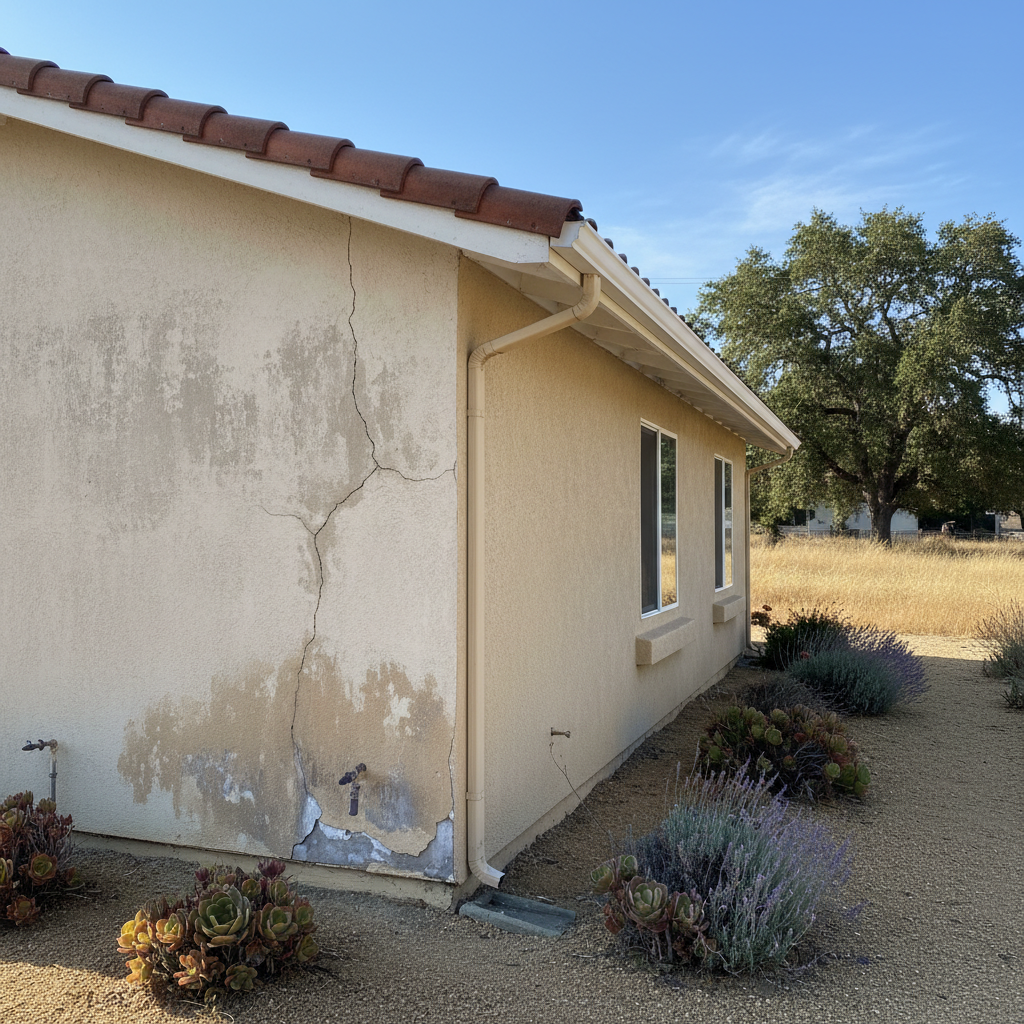
The main difference in appearance comes down to how they handle the test of time. Traditional stucco, with its rigidity, tends to show its age through more defined, sometimes spiderweb-like cracking. One-coat, being more flexible, might show fewer cracks, but if it does get a significant impact, the damage can sometimes look a bit more 'plastic-y' or less natural than a crack in traditional cement stucco.
My Recommendation for Santa Rosa Homeowners
So, which one should you choose? Look, both are good options, and Santa Rosa Stucco & Plastering installs both systems with the highest quality. But if you're asking me for a clear recommendation for most homes here in Santa Rosa, especially if you're looking for the absolute longest-lasting, most robust solution with minimal fuss over decades, I'd lean towards traditional 3-coat stucco.
Why? Our climate. We get hot summers, wet winters, and sometimes those temperature swings can be tough on materials. The sheer thickness and proven track record of traditional stucco just give you that extra peace of mind. It's a tried-and-true system that's proven to stand up to everything Sonoma County can throw at it. While the upfront cost might be a little higher, the long-term durability and lower risk of significant issues make it a solid investment for your home.
That said, if budget is a primary concern, or if you're adding stucco over an existing exterior that needs an insulation boost, one-coat stucco is a perfectly viable and effective option. It's a good system, just with slightly different characteristics. Ultimately, it comes down to your priorities and what you're looking for in terms of longevity and initial investment.